You’ve likely felt the subtle yet frustrating friction. An Android-using friend gives a thumbs-up to your iMessage, and your iPhone registers it with a clunky, quoted text notification: So-and-so Liked “your original message full text”. God forbid you’re on a large group thread. Or perhaps you’ve tried to share a photo with a friend who uses a different type of smartphone, only to find the seamless experience of Apple’s AirDrop has no simple, universal equivalent. These everyday annoyances are more than just minor inconveniences; they are the visible ripple effects of a much larger battle over competition, innovation, and consumer choice in the digital age.
The Walled Garden Strategy 🪴

These experiences are the direct result of a walled garden strategy, a closed ecosystem where a service provider controls the hardware, software, and services, deliberately limiting interoperability.1 This approach is built on powerful economic principles like network effects (the more users on a platform, the more valuable it becomes) and high switching costs, which create a powerful lock-in that makes it difficult for consumers to leave.
This friction is often created by eschewing universal standards. For decades, we have enjoyed open formats that allow for easy data portability, like .eml for email, .ics for contacts, and .cal for calendars. However, new formats sometimes emerge that re-introduce friction, such as Apple’s .HEIC image file, which isn’t universally recognized by other platforms and tools without conversion. This isn’t an accident; it’s a feature designed to keep users tethered to a single ecosystem.
A similar wall is built around cloud storage. Services like Google famously offer a baseline of free storage (15 GB across Gmail, Drive, and Photos) before requiring users to pay for more. This model is common, but the issue runs deeper: each service requires its own paid storage plan. Your Google One storage is useless for your Apple iCloud backups, and neither can be used for other services that also demand you pay for storage. This exists despite the fact that raw cloud storage has been largely commoditized by providers like Amazon S3. Consumers are locked out of a “Bring Your Own Storage” model, which would allow them to use a single, cheap, bulk storage plan for all their needs. Instead, they are forced into multiple, fragmented, and often overpriced storage plans, further cementing their place within each company’s walled garden.
Antitrust in Action: Deals, Lawsuits, and Failed Mergers
While product features are the most visible part of this strategy, the battle to maintain dominance runs deeper and has drawn significant attention from regulators.
One of the most impactful examples is the multi-billion dollar agreement where Google pays Apple to be the default search engine on the iPhone’s Safari browser. This sweetheart deal, 💘 central to a Department of Justice antitrust lawsuit, is seen by regulators as a way to illegally lock out competing search engines and preserve a monopoly.2
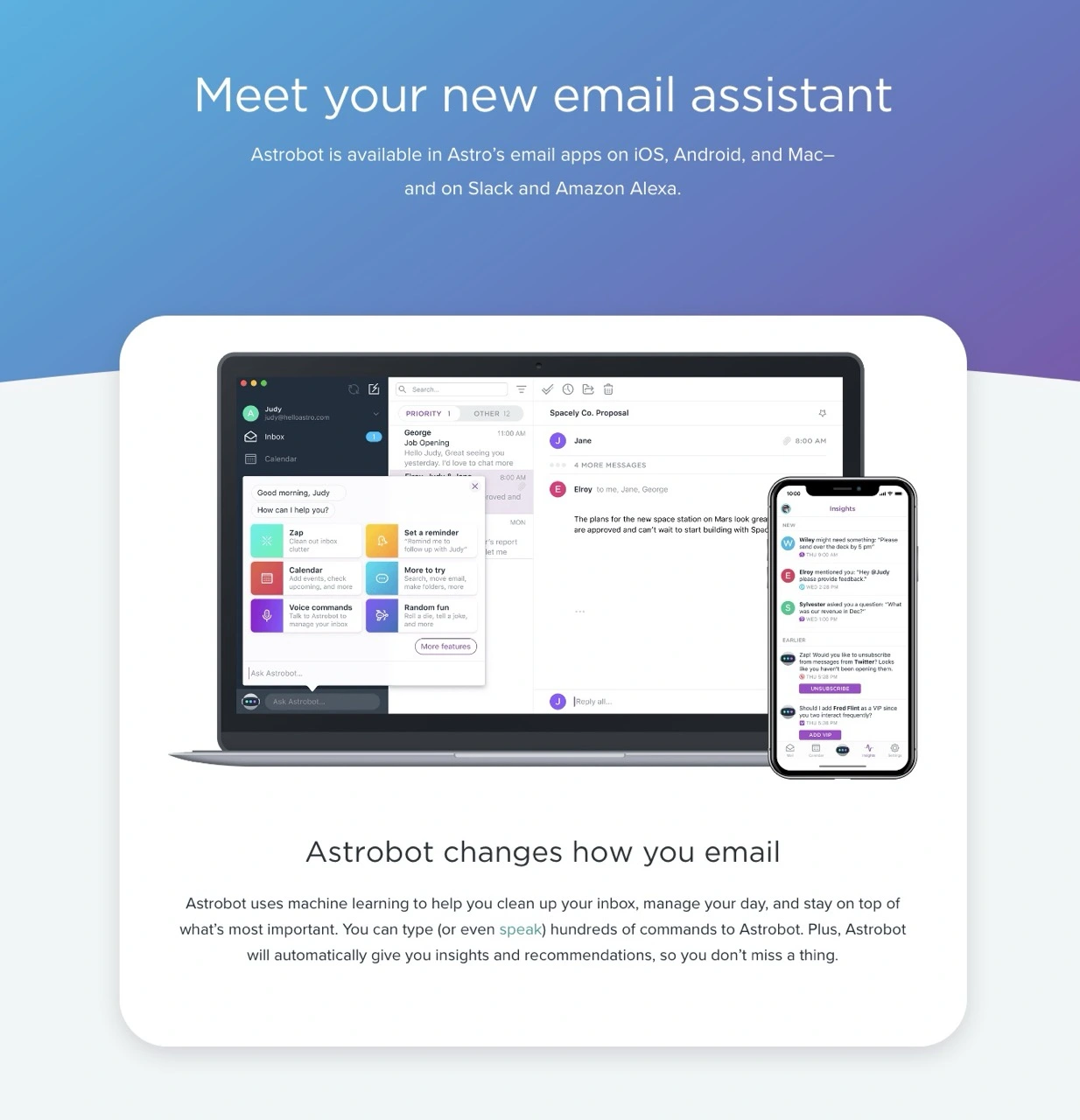
Another strategy that directly harms consumer choice is the “kill acquisition,” where a large company buys an innovative competitor simply to shut it down.
Astro was acquired by Slack (before its own eventual acquisition by Salesforce) and subsequently shut down, eliminating a beloved product that forced its users elsewhere. This illustrates a frustrating misalignment between corporate strategy and the public interest.
Astro is joining Slack! 🚀 We’re excited to announce that Astro is being acquired by Slack! Slack is the maker of the fastest-growing enterprise app in history, and we’re joining them to help connect email and calendaring to all the work teams do in Slack. On Wednesday October 10, we’ll shut down our Astro apps for Mac, iOS, Android, Amazon Alexa, and Slack. As of today, we’ve also disabled signups of new users. For current users of the Astro apps — because we continually sync data with Gmail & Office 365 accounts, you can switch to email apps from Google, Microsoft, Apple or other providers without seeing any changes in your messages or calendar events. (Just remember not to leave behind any messages in Astro that you snoozed or scheduled to send after October 10 since those messages will no longer be available after that date.) […] We’d like to thank you, our users, for whom we built this company, and for whom we look forward to serving further as part of Slack. We’re grateful to our entire team for the commitment and excellent work of the past few years.Peep some of the language used by the acquired company below
Slack acquires Astro to help email and channels work together
The team behind the popular email client and Slack app will make it simpler for customers to transition important conversations from email into Slack We believe that what makes channels so powerful is a thriving platform that brings together conversations, files, and best-of-breed software tools into one streamlined hub for collaboration. More and more, channels are where work happens for teams around the world. But we all know that email is still a very important tool in business communication. Billions of emails are sent every day, and in those are millions of documents exchanged, contracts negotiated and decisions memorialized. We’ve taken some steps to make it possible to integrate email into Slack, but now we’re in a position to make that interoperability much simpler and much, much more powerful. Our goal is to make it as easy as possible to help teams shift conversations to where they would be most productive — in a channel, alongside the relevant context and software tools teams use at work, from ServiceNow and Salesforce to Workday and Box. To help make this possible, we’ve acquired Astro, a company with deep expertise in email infrastructure and maker of the popular Astrobot for Slack. In Astro, we’re bringing on an incredible team that collectively have built the industry’s best mail and messaging tools like Zimbra, Acompli (acquired by Microsoft, and the foundation for Outlook Mobile), and Mumbo (acquired by LinkedIn). We see this as a natural next step as channel-based collaboration becomes the default way of working. via Slack blog postVersus the choice of phrasing by the acquiring company, Slack 🤔 (click to expand)
This increased scrutiny is having a tangible effect across the industry. We’ve seen it in the high-profile lawsuit between Epic Games (creator of Fortnite) and Apple over app store monopolies and in the recent wave of major acquisitions that have been abandoned under regulatory pressure, such as Adobe’s attempt to buy Figma.3
The Regulatory Response: Learning from the EU and History
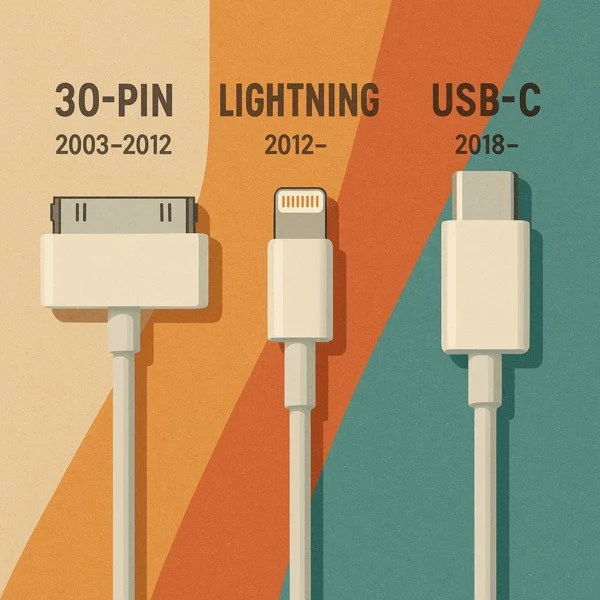
While the U.S. has ramped up litigation, the European Union has taken a more proactive legislative approach. The EU’s Digital Markets Act (DMA) is a landmark piece of legislation designed to ensure fair and contestable digital markets by forcing “gatekeeper” companies to open up their services. The most concrete example of the EU’s power is the mandate for a common charging standard: USB-C. This move, aimed at reducing e-waste and improving consumer convenience, forced Apple to abandon its proprietary Lightning connector on new iPhones. It’s a powerful demonstration of how regional regulation can set a global standard.4
This type of regulation is not without historical precedent. In the mid-20th century, the U.S. government took on the major film studios in a case known as the Paramount Decree. The studios controlled everything from movie production to the theaters where they were shown—a business model with clear parallels to how tech giants control their app stores and operating systems today. The Supreme Court forced the studios to sell their theater chains, breaking up the monopoly and fostering greater competition.
In the modern era, there are some signs of healthy competition in other industries. We can see a powerful case study in the modern US cellular market. For years, the market was a rigid oligopoly, but today, thanks to the rise of Mobile Virtual Network Operators (MVNOs), we see a glimpse of what robust competition looks like. The advent of universal standards like eSIM has dramatically lowered switching costs, allowing consumers to change carriers in minutes from their couch. In a saturated market where most consumers already own a smartphone, the primary way for carriers to grow is by poaching customers from the competition. This has forced a dramatic shift in pricing models; plans once deemed only for low-income customers, like prepaid or pay-as-you-go, are now mainstream tools for attracting savvy consumers. This fierce competition, even with the “big three” carriers still owning the underlying network infrastructure, has led to a host of consumer-friendly features that were once scarce, including: flexible data plans that can be changed monthly, aggressive free trial periods, family plans with heavy discounts, and a focus on customer service to retain subscribers. It proves that when companies are forced to compete on an open infrastructure, consumers win.
And yet, in a stroke of irony, Paramount Global has recently been at the center of high-stakes merger talks, placing the fate of the very same company back in the hands of regulators nearly 80 years later. This raises questions about the optics of regulatory independence in the current era. A cynical view suggests that large media companies can effectively pay for merger approval by settling long-standing, unrelated violation cases with agencies like the FCC for tens of millions of dollars. While officially a penalty for past infractions, the timing of such settlements can be seen as a tactic to generate goodwill and curry favor for a multi-billion dollar deal.5 This pattern raises a deeper skepticism about whether the public interest can truly compete with the power and influence wielded by corporations, who speak the language of lobbying and campaign finance far more fluently than the average consumer.
What a More Open Future Could Look Like
The ongoing antitrust battles and regulatory pushes signal a potential shift away from closed ecosystems. A successful move toward greater interoperability could lead to a world where sharing photos between an iPhone and an Android is as seamless as AirDrop, and where messaging apps work together without the “green bubble” divide.
The path forward involves a complex debate between the benefits of a seamlessly integrated (but closed) ecosystem and the innovation and choice that flourish in an open, competitive market. For consumers, the outcome of this struggle will fundamentally shape the flexibility, cost, and quality of the digital tools that have become integral to our daily lives.
PS Apple’s request to have the Biden administration’s suit against them thrown out was recently dismissed, which is something to watch closely as Trump’s DOJ is currently looking really crossed up.

-
I’ve recently noticed the famed digital town square, X (f.k.a. Twitter) pretty tightly limits off-app access to Tweets these days, especially when unauthenticated; a fairly ironic outcome from such a vocal advocate of free speech in our pal Elon. ↩︎
-
Wired reported 4 key emails that helped DOJ build its case against Apple. For argument’s sake, a clear sign of competition would be if Apple had a step as prominent in device setup as enabling Siri to select your default search engine. Just not a priority for them 🤑 ↩︎
-
Figma cited lack of clear path to regulatory approval in their announcement following 15 months of regulatory review. I’m betting it wasn’t the US regulators but instead the EU that were the issue. ↩︎
-
I’m super excited to consolidate all my charging cables, if I’m being perfectly honest. To only need one cable for my tablet/e-reader, phone, headphones and laptop while on the go is very refreshing. I will no longer need my slick cable organizers 🤓 ↩︎
-
Another deal sweetener: cancelling any late night hosts that speak out against the regime of your regulators. ↩︎